


In a nutshell: Quality assurance testing is essential if you want to eliminate all bugs from your software. However, how easy is it to test your software? This guide covers: What is software testability?, How to assess a software’s testability?, Verify module capabilities, Verify test support capabilities.
Quality assurance testing is essential if you want to eliminate all bugs from your software.
However, how easy is it to test your software?
Although often overlooked, software testability is crucial for ensuring the quality, reliability, and effective maintenance of applications.
In this article, we will explore the concept of software testability and discuss ways to improve it in order to optimize your testing processes.

What is software testability?
In the software development ecosystem, testability measures how easy it is to verify the success or failure of each software module, subsystem, component, and requirement.
Testability depends heavily on the software architecture; the more complex a system is, the harder it is to test.
The key characteristics that define software testability include:
1. Observability: the ability to detect how each software module and component responds to user input, including changes in the system’s internal processes.
2. Testability: the ability to test each software module in isolation.
3. Simplicity: The effort required to test an application, assessed in terms of functional, structural, and code-level simplicity.
4. Stability: the number of changes required after appropriate testing.
How can you verify the testability of software?
Check the module capacities
Test cases must be designed to evaluate each module and the interactions between them, including:
- Can each module be tested individually?
- Can each module be tested with all other relevant modules?
- Can each module be tested with third-party hardware and software modules?
- Can each module be tested using its own data?
Check test support capabilities
During active testing, record the entry point for testing the drivers and the root for each tester working on the system, each test interface, and each test scenario.
Thus, during incremental testing, evaluating the root and the test driver will be easier.
Check the ability to disclose defects
Minimize system errors to prevent them from becoming major obstacles during more extensive testing.
Testers must be aware of defects that could cause system malfunctions.
Check the observation capabilities using your testing tool
To achieve full observability of your software in a testing environment, you need a testing tool that handles the following tasks:
Automatic data collection: Automated testing tools can automatically collect data on software behavior while running tests.
This includes monitoring inputs, outputs, the software's internal states, and other relevant metrics.
Results Analysis: These tools often include results analysis features, allowing QA teams to easily view and interpret the collected data. They provide detailed reports on software performance, errors encountered, and other key metrics.
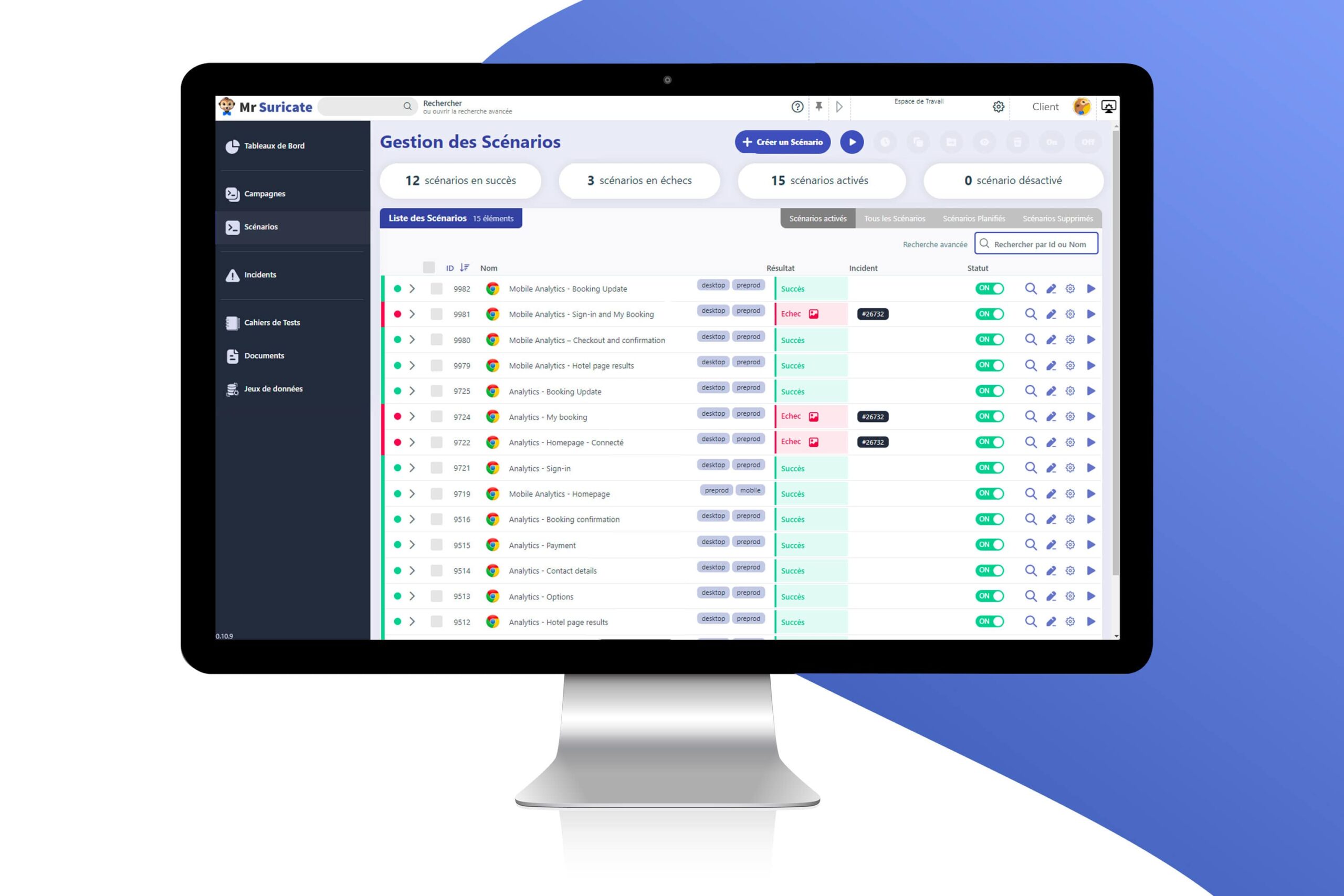
Error Traceability: Automated testing tools can automatically track and log errors detected during test execution. This simplifies the debugging process by quickly identifying the parts of the code that are causing problems.
Continuous monitoring: Some tools provide continuous monitoring of the software even outside of test scenarios. This helps detect potential issues under real-world conditions, thereby contributing to greater software observability.
Integration with Other Monitoring Tools: Automated testing tools can be integrated with other system monitoring solutions. This provides a comprehensive view of the software’s health and performance by combining test data with information from other sources.
Log Generation: Automated tools often generate detailed logs of test execution, recording the actions performed, the results obtained, and any errors encountered.
Why is software testability important?
1. Earlier detection of bugs
High testability allows for more extensive testing from the outset, identifying more bugs in the early stages of the testing cycle. Bugs detected early are easier to fix.
2. Makes life easier for testers
High testability makes software easier to test, reducing the time and effort required to create tests, detect bugs, and report them to developers.

Improving Software Testability – Best Practices
At every stage of testing, aim for 100% test coverage. However, given the complexity of modern software, this remains a challenge.
One way to expand test coverage is to improve the testability of your software by following best practices:
Name the elements clearly
Make sure that each element is named in a predictable and unique way, even when developing user interfaces for different platforms.
Test in a realistic environment
Manual and automated tests will be more accurate if the test environment closely mirrors the production environment, using similar software versions and compatible server/virtual container specifications.
Stable and Consistent UI Design
A consistent user interface design makes it easier to create tests that provide sufficient test and code coverage.
Use an automated testing tool for better observability
An automated testing tool improves software observability by closely examining the results in response to each input.
Mr Suricate No-code automated testing tool
Software testability is a fundamental component of software quality.
By investing in development practices focused on testability, your teams can reduce the costs associated with errors, speed up the development process, get more out of your testing tools, and deliver more reliable software to your users.
The no-code SaaS solution Mr Suricate a wide range of automated tests to help you manage your acceptance testing and provide your users with the best possible experience.
Take control of your applications and detect bugs in real-time across your websites, applications, and APIs by regularly reproducing your user journeys.
Further Reading
FAQ
What is software testability?
It is its testability: the more testable a piece of software is, the easier it is to detect its defects and verify its behavior.
How can we assess testability?
By considering the modules' ability to be isolated, the ease of setting up tests, the observability of their behavior, and clear defect reporting.
Why Improve Testability?
Because software that is testable reduces testing costs and time and increases reliability. Testability must be considered from the design phase onward.
How can you improve an application's testability?
By making components observable and isolatable, structuring the code, and making it easier to access internal states for testing.
How Mr Suricate into all this?
By robustly automating user flow testing, which leads to more testable interfaces for both business teams and key accounts.
Learn More: The Glossary of Automated Testing.