


In brief: QA tests are essential for ensuring software quality. This guide covers: What is CFTL?, Overall, automated testing tools are underestimated, The no-code automated testing tool for an accelerated testing process.
QA testing is essential for ensuring software quality.
However, these processes can often become time-consuming, requiring development teams to allocate significant time and effort, thus highlighting the necessity of automated testing!
In this article, we will explore the findings of the 2023 survey conducted by the CFTL (French Software Testing Board) and underscore the importance of an optimal test automation strategy to enhance efficiency and mitigate risks.
What is the CFTL?
Recognized technical experts in the field of software testing united in 2004 to establish the association: the French Software Testing Board (CFTL).
Acting as the sole representative of the ISTQB® (International Software Qualifications Board) in France and all French-speaking countries without a local board, the CFTL:
- Develops and administers examinations.
- Accredits trainers and training organizations, and participates in the activities of the ISTQB®, the IREB® (International Requirements Engineering Board), and the IQBBA® (International Qualification Board for Business Analysis).
The CFTL's primary mission is to certify the technical and methodological knowledge of software testers through objectively designed and independently developed certification examinations.

The CFTL 2023 Survey – A Revealing Overview of Testing Practices
This CFTL survey provides a unique opportunity to regularly assess the current state and track the evolution of testing practices over more than 10 years.
It offers an insight into the current state of testing practices among industry professionals.
Thanks to anonymized responses, we can identify areas where automation is underestimated to achieve a development process that is as efficient and time-saving as possible.
Overall, automated testing tools are underestimated.
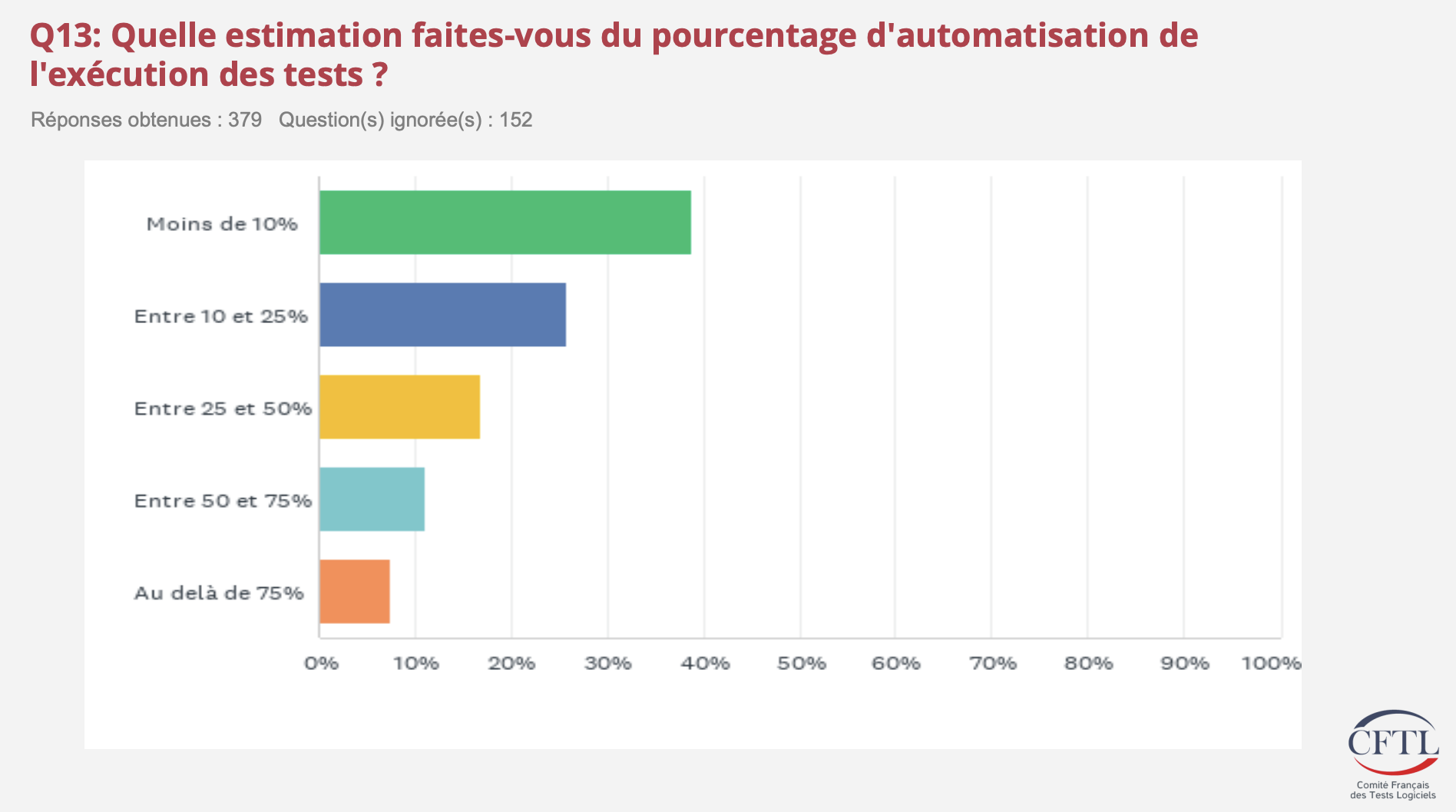
According to the survey, the majority of testers do not automate their test execution, indicating that manual testing remains widely prevalent.
Why Automate Test Execution?
While automated tests do not entirely replace manual testing, their primary objective is to reduce the manual effort involved in test case execution, thereby enabling the delegation of redundant tasks to automated agents.
Automated testing remains the most effective technique for enhancing test coverage and execution speed.
Key Justifications:
- Manually testing each scenario, especially when considering language and browser combinations, consumes significant time and resources.
- Enables continuous 24/7 monitoring.
- Facilitates faster test execution through parallel testing.
- Consequently, this allows for broader test coverage.
Continuous Integration – A Domain Where Automation Enhances Agility
Continuous Integration (CI) is the practice of automating the integration of code changes from multiple contributors into a unified software project.
This is an essential DevOps practice, enabling developers to frequently merge code modifications into a central repository where builds and tests are subsequently executed.
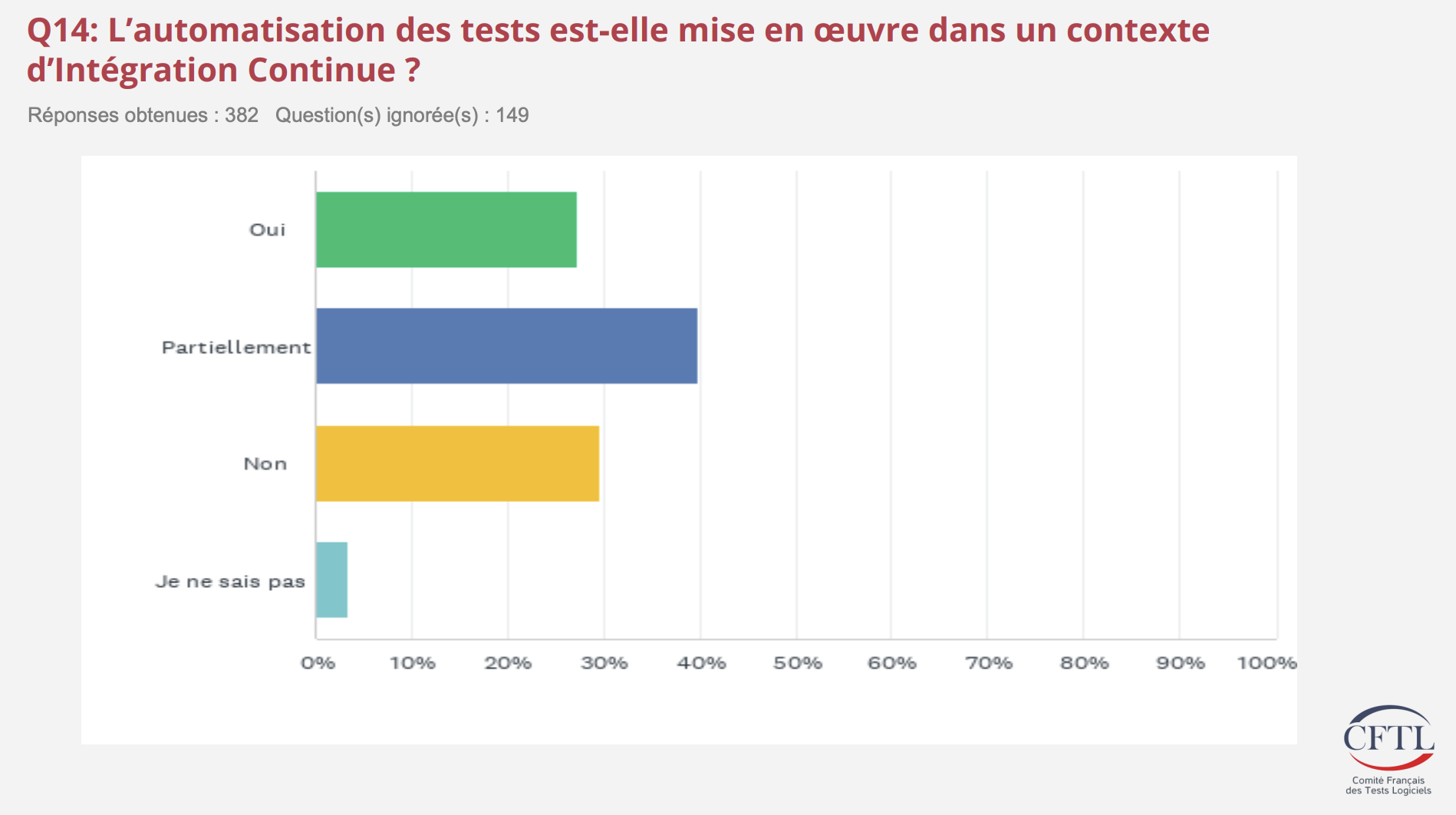
However, among 382 responses, 113 (29.58%) of testers do not implement test automation within Continuous Integration environments.
Why is test automation within Continuous Integration so crucial?
Without automating tests within a Continuous Integration (CI) framework, developers cannot validate early on that their implemented developments do not introduce regressions, right from the integration phase (Shift-left testing).
This can consequently lead to lower quality code releases with an elevated failure rate, as automated tests would only be executable in a staging environment.
These risks escalate exponentially as both team size and codebase complexity expand.
Integrating automated tests into a Continuous Integration pipeline enables developers to more efficiently and rapidly ensure their code is production-ready.
Complementing the "unit tests" performed by developers, establishing a development platform to verify the interface, as early as possible and through automation, becomes highly pertinent.
Security and accessibility tests are often under-automated.
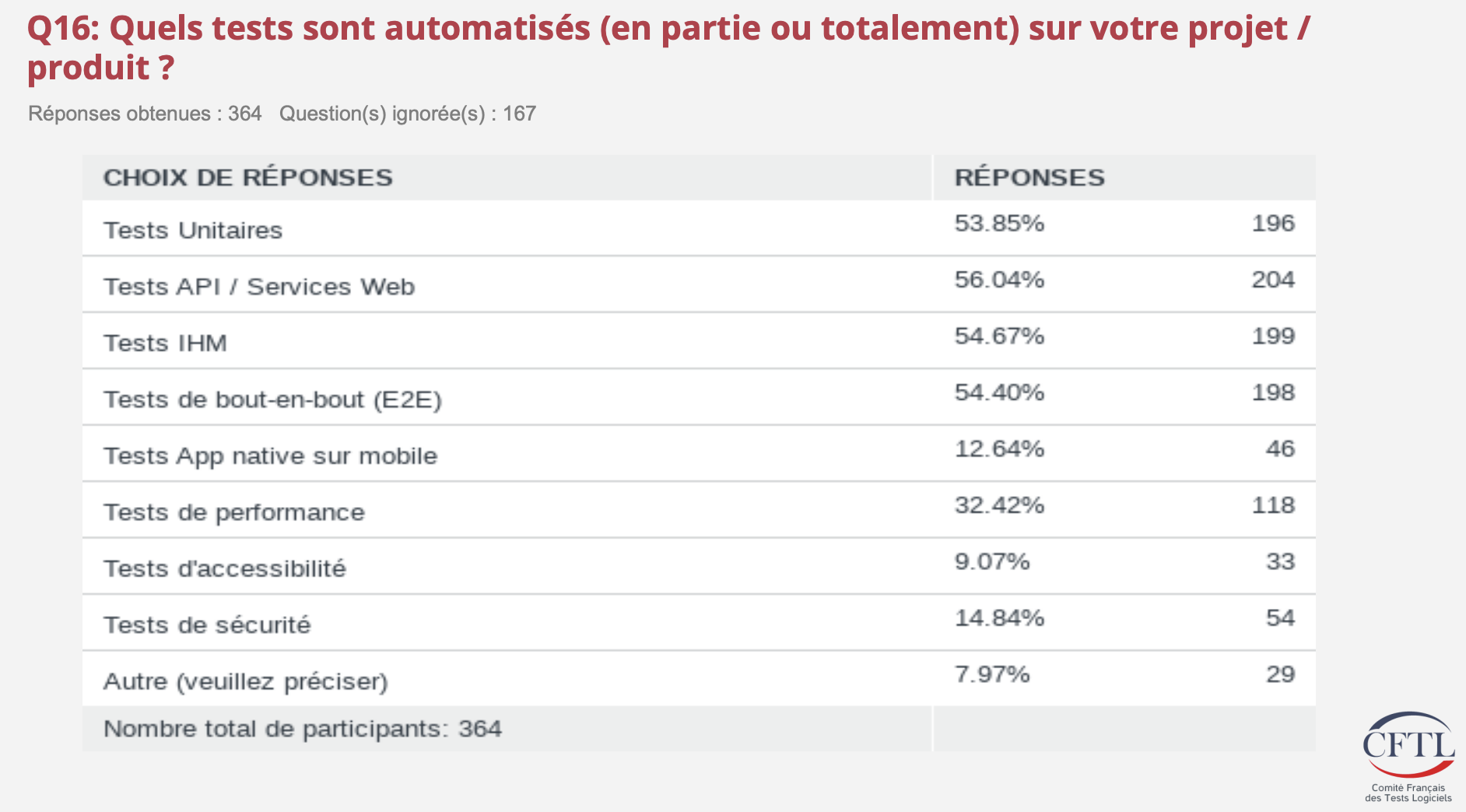
Compared to other testing methodologies, accessibility tests and security tests exhibit relatively low levels of automation.
Nevertheless, automated testing provides significant benefits within these domains.
Why Automate Security Testing?
The consequences of a data breach can be devastating, ranging from the loss of customer trust to legal penalties.
Implementing a testing tool that enables proactive detection of security vulnerabilities in your applications is therefore imperative to thwart cyberattacks on your network and mitigate potential damages.
Beyond the indispensable monitoring of your platforms, security testing represents a critical imperative in today's digital landscape.
Why Automate Accessibility Testing?
Beyond adherence to governmental legislation (Law of February 11, 2005, on equal rights and opportunities, Decree No. 2019-768 of July 24, 2019) and addressing the needs of individuals with disabilities, an accessible website provides several less apparent benefits, including:
- Enhanced SEO Performance
- Improved Codebase Quality
- Increased Ecological Efficiency
- Enhanced Brand Reputation
However, numerous accessibility issues stem from back-end development practices, making it challenging and particularly time-intensive to identify all accessibility problems through manual site navigation.
For example, automated accessibility testing allows you to reliably detect broken links, the presence of alternative text, basic color contrast, and the presence of form labels—almost instantly—whereas doing so manually would have taken several hours.
The No-Code Automated Testing Tool for an Expedited Testing Process
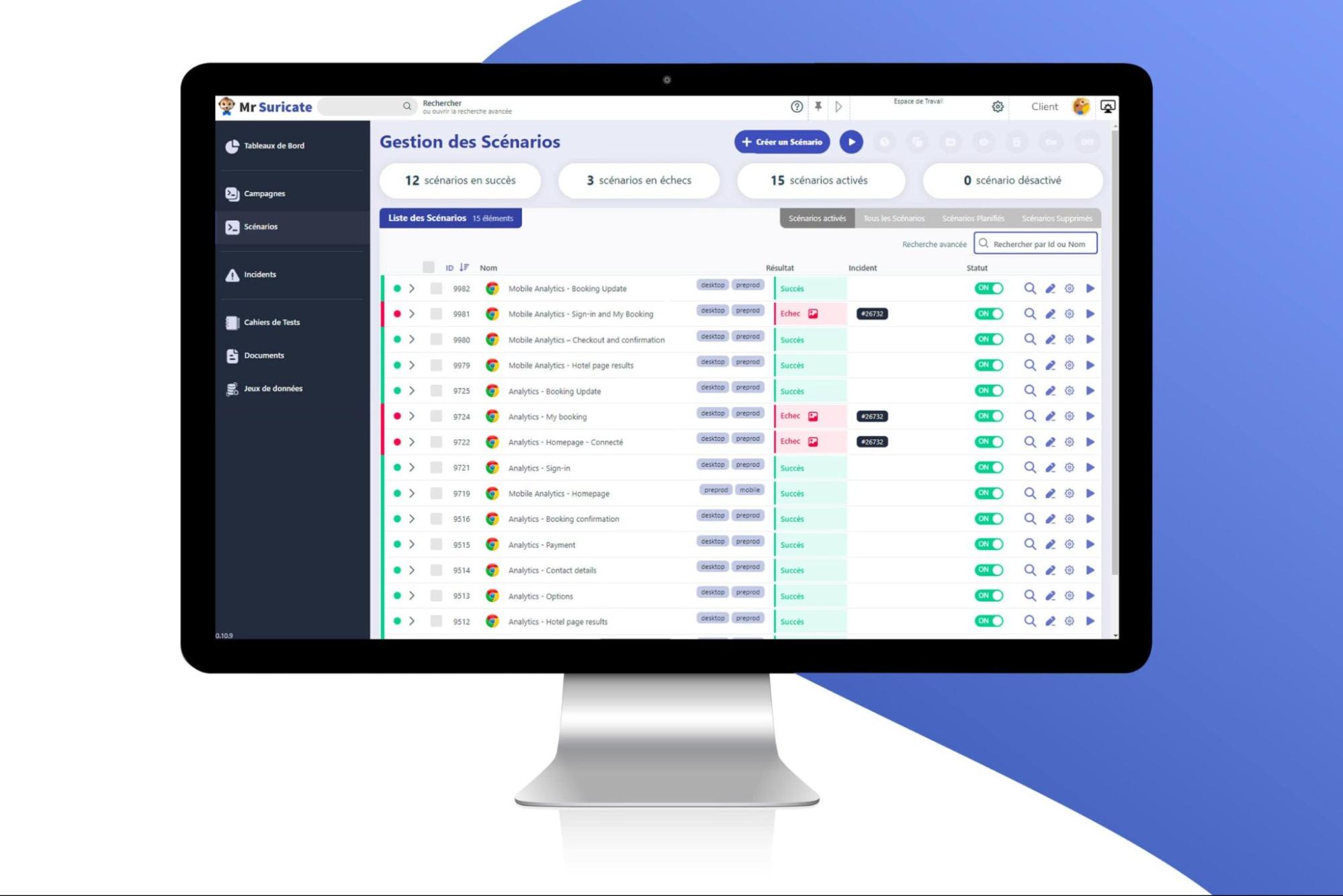
No-code automated testing tools like Mr Suricate proving to be valuable allies when it comes to eliminating time-consuming tasks that are prone to human error.
By offering features that speed up test development, intuitive dashboards, and precise alerts in the event of anomalies, testing tools such as Mr Suricate enable QA teams to become more efficient.
Furthermore, a no-code testing tool empowers non-technical profiles to perform tests with confidence.
Mr Suricate France's leading provider of no-code automated testing
At Mr Suricate, our mission is to protect our clients’ brand image and increase their revenue while ensuring a smooth user experience by detecting bugs before and after deployment.