
When it breaks
A scenario pops up on a Tuesday morning. Here are the five screens you'll go through, in order, until it turns green again.
1
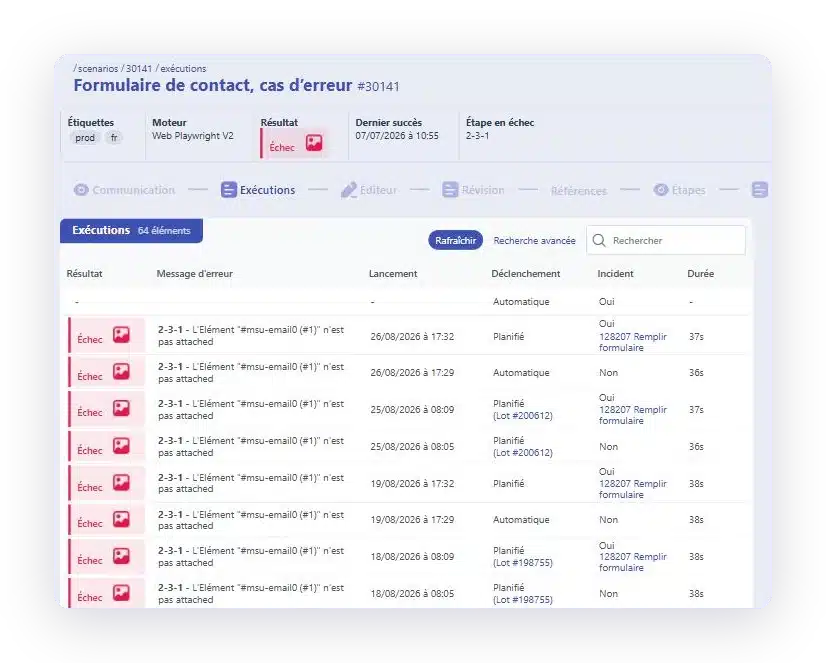
The script clearly shows which step failed and the exact message returned by the engine. The log shows how long this has been going on, how often it occurs, and which of these runs triggered an incident. No one needs to replay the process to know what we’re talking about.
2
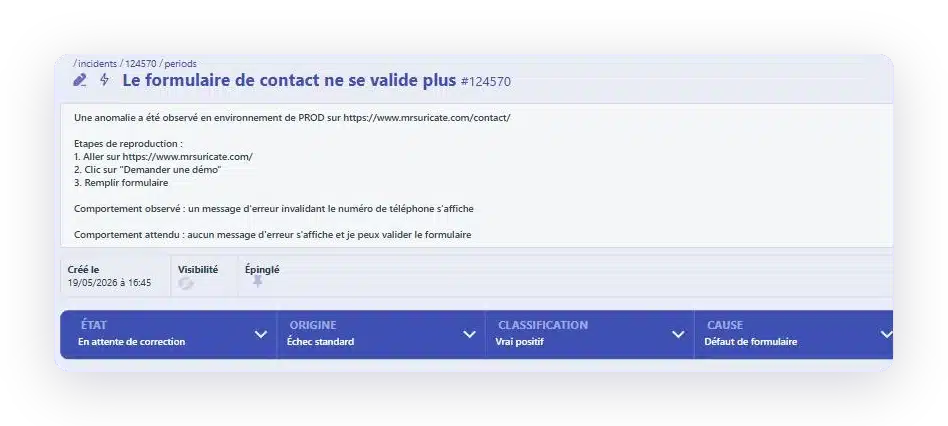
A raw failure tells us nothing. The incident, on the other hand, carries its own cause and severity level, and it has been classified as either a true positive or a false positive. It counts its occurrences rather than piling them up; it knows which scenarios it affects; and it does not reopen four times for the same reason.
3
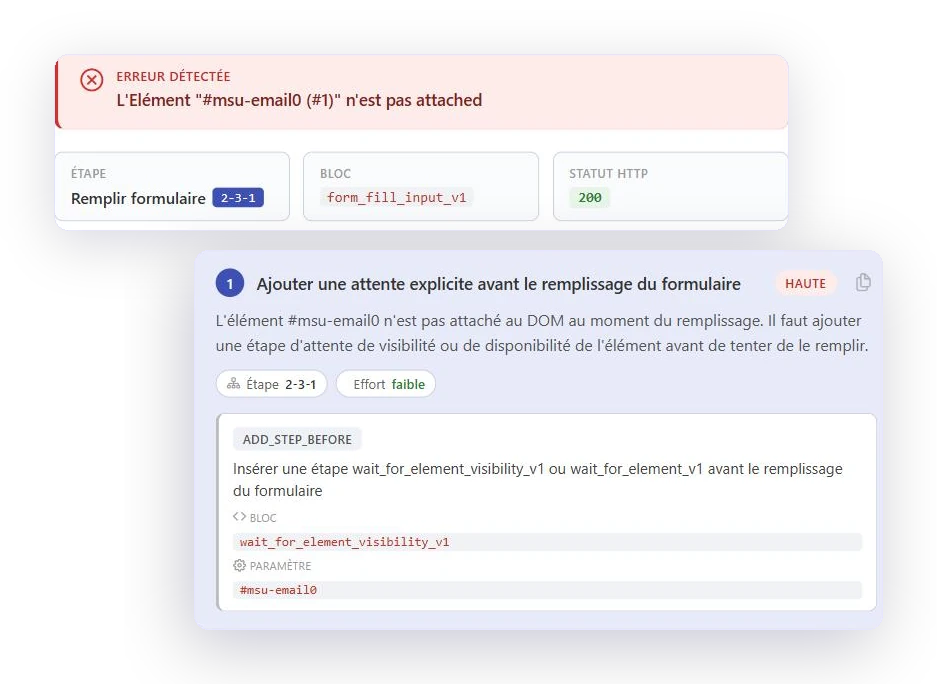
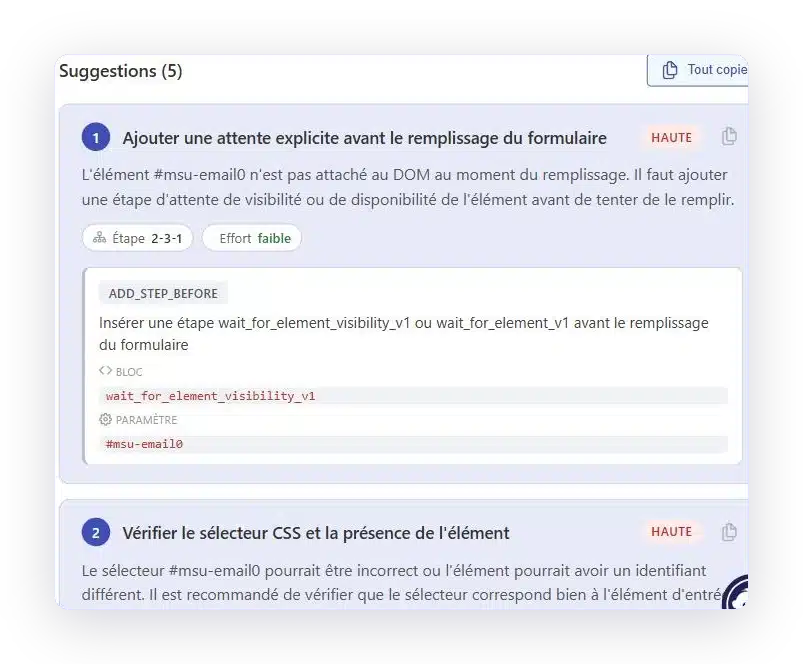
That’s self-healing. The AI analyzes the error, the affected block, its parameters, and the page context, then suggests corrections ranked by priority and effort. Each suggestion specifies which block to insert or replace, and with which parameter. You review them, apply the changes, or discard them.
4
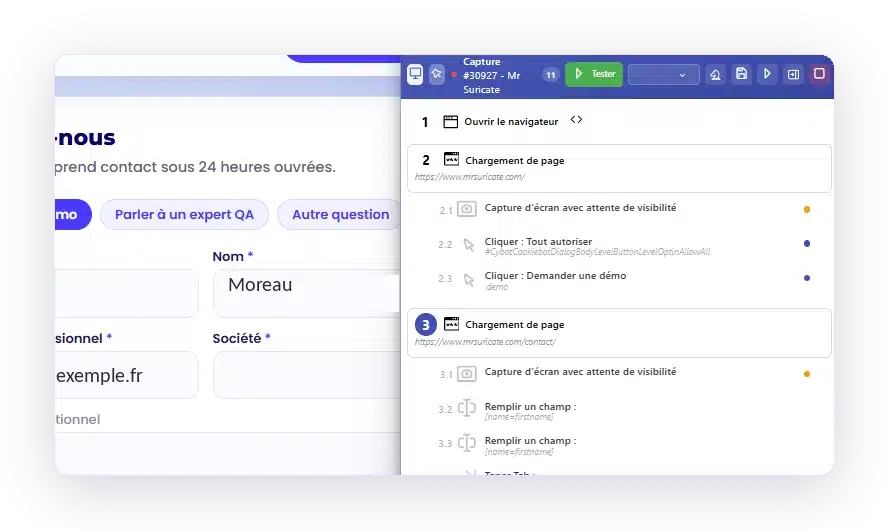
Suricapture replays the scenario on your machine, step by step, in a real browser. You see the failure happen instead of inferring it from a log, and you can take control of the step that’s causing the problem. Before opening any incidents, the platform automatically replays technical failures on its own.
5
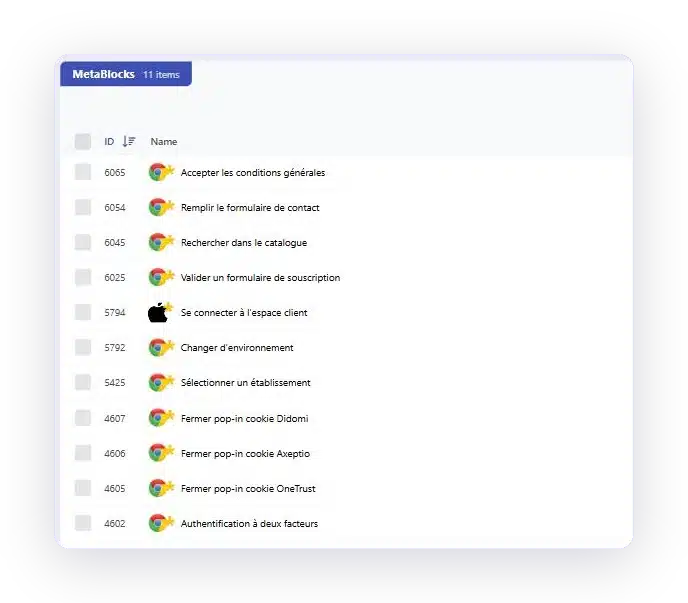
Logging in, accepting cookies, selecting a location: these steps recur in almost all of your user journeys. They’re contained within a single metablock. When the interface changes, you update the metablock, and all the scenarios that call it are automatically brought back up and running together.