

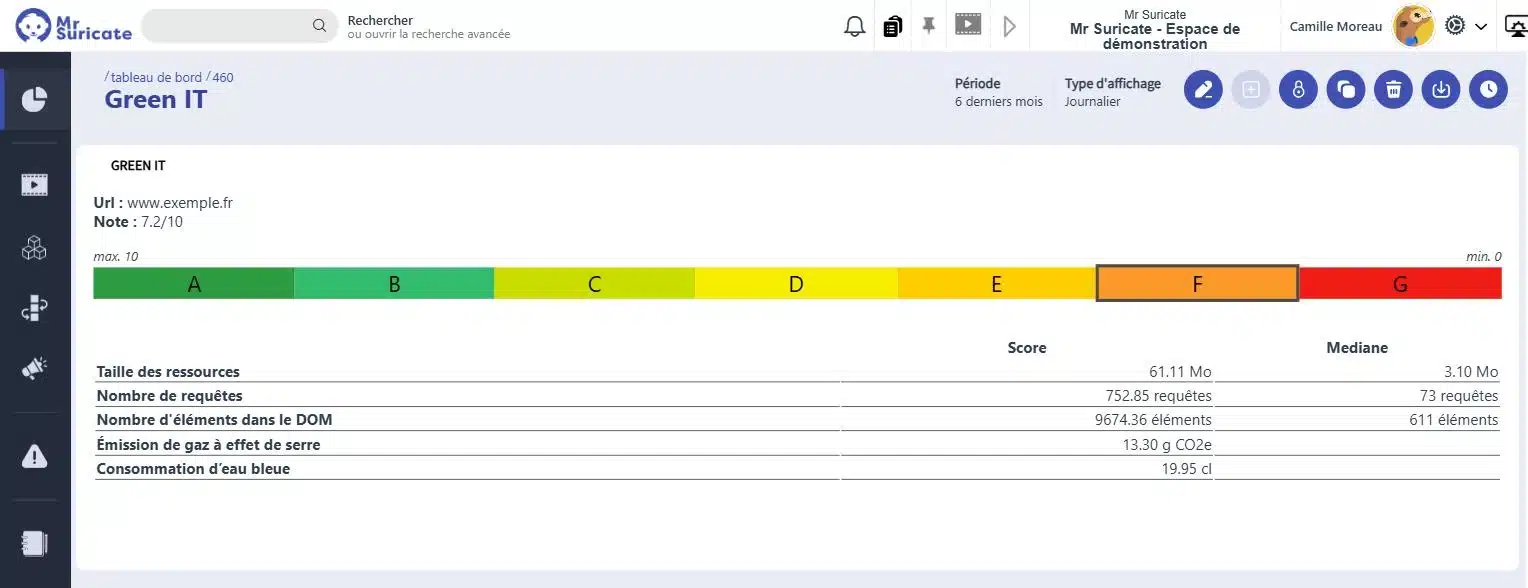









Weight and Queries by Route·Long-Term Monitoring·Web and Mobile
A web page rarely gets heavier all at once. It gains 200 kilobytes with each update, one tag at a time, and no one notices until it weighs three times as much as it did originally.
A tag added for a campaign remains there after the campaign ends. A library loaded for a component is loaded on every page. An uncompressed image is allowed because it doesn’t cause any problems. Each of these decisions is reasonable on its own, but together they result in a four-megabyte product page that no one intended.
A five-step checkout process means five page loads. The measurement focuses on the actual user journey rather than the homepage.
Number of calls, weight by resource type, percentage of third-party scripts. That’s where most of the performance issues lie.
A single measurement doesn't tell us anything. When compared to the previous week's measurement, it indicates responsible delivery.
You set the acceptable weight for each size. Any excess is flagged just like any other deviation.
“An easy-to-use, fun tool that’s similar to Scratch. The campaign management feature gives me peace of mind before each deployment.”
Coralie Cebron de LisleSoftware Tester, Optivalue
GO FURTHER
Fifteen types of tests, four categories. Each one answers a different question about your application.
Is there a term you don't understand? The automated testing glossary defines it.
YOUR QUESTIONS
The most common questions we get about footprint measurement.
The load transferred and the number of requests for a complete user journey, broken down by resource type and the proportion of third-party domains. This is objective data, measured during scenario execution, and comparable from one week to the next.
The test provides the input data for such a calculation, not the calculation itself. Converting kilowatts to carbon equivalent involves assumptions about the energy mix and the device fleet, which are part of your methodology rather than the test tool.
They overlap without being the same. A heavy page is often slow, but a light page can be slow due to a slow-responding backend service, and a heavy page can seem fast on a good connection. The two metrics should be considered together.
Start with your own history rather than an external standard. The primary goal isn't to reach a target weight, but to prevent weight gain: use your current weight as a baseline and refuse to let it increase without an explicit decision.
Yes, provided that the scope is clearly defined. A series of dated measurements along identified routes constitutes solid, verifiable data—far more reliable than a general estimate produced once a year.
A 30-minute demo of your own app. You'll see one of your workflows automated in real time, without writing any code.