










Mutual consent verified·Listed Plotters·Inspection with every delivery
Refusing cookies should really prevent trackers from running. It’s a simple statement, and that’s exactly what doesn’t seem to be working: the banner displays correctly, and a tracking script still runs.
A tag added directly to the code for a campaign test, a third-party script that loads another script, a social media integration implemented by a team that wasn’t familiar with the rule. The consent banner is there, and it’s configured correctly, but it doesn’t control everything that triggers on the page. This is a compliance issue, and it goes unnoticed without verification.
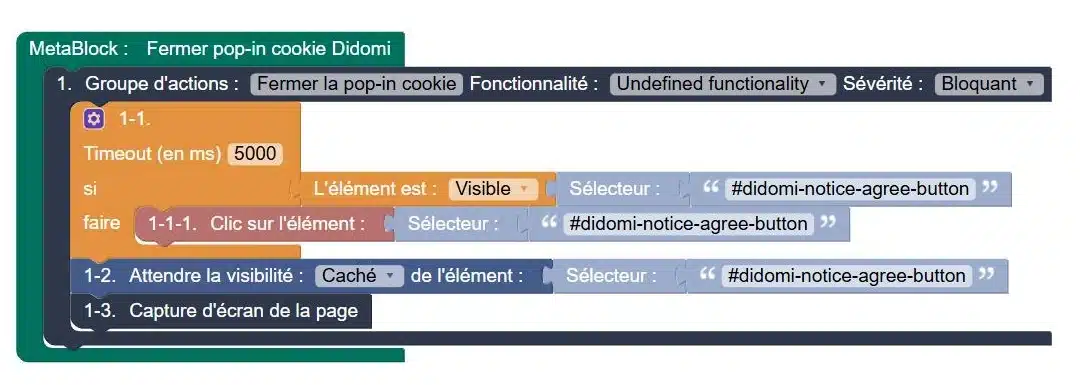
The script blocks cookies, then lists what still loads. This is the check that no one ever does—and it's the one that matters.
A tracker that doesn't start after acceptance means lost data. Both scenarios are checked.
What happens when the user changes their mind. This is a requirement, and it’s rarely tested.
Compliance is eroded by the accumulation of small changes. Monitoring keeps pace with the release of new versions.
“With Mr Suricate, we’ve automated label verification, secured our data, and gained the reliability we need to make strategic decisions without errors. Plus, it’s fun!”
Xavier ValetHead of Data Analytics, HelloWork
GO FURTHER
Fifteen types of tests, four categories. Each one answers a different question about your application.
Is there a term you don't understand? The automated testing glossary defines it.
YOUR QUESTIONS
The most common questions we get about compliance testing.
The actual behavior of the page based on the user's choice: which trackers are triggered after a refusal, which ones after acceptance, and what happens when consent is withdrawn. The audit focuses on the actual requests and cookies set, not on the declared configuration.
No. The test establishes a factual finding: this tracker was sent even though the user had refused. The legal classification and the decision remain the responsibility of your DPO. In practice, the technical finding is what is most often missing.
Yes, because the test depends not on the tool but on its effect. The script interacts with the banner just as a user would, and then observes the page. The result is the same regardless of the provider.
With every production release. Compliance issues almost always stem from successive additions that, taken individually, seemed harmless: a campaign tag, a review widget, a share button.
Cookies that have been set are detected at runtime, which allows you to verify their presence and their declared characteristics. This is a useful supplement to the inventory maintained by your DPO, which tends to diverge from reality over the course of several months.
A 30-minute demo of your own app. You'll see one of your workflows automated in real time, without writing any code.