


The test automation revolution is underway. And according to Research and Markets, which has published a study on the global market for robotic process automation (RPA) and artificial intelligence, this is just the beginning.
Speed, frequency, volume, quality: automating functional testing offers numerous benefits for businesses across all industries (e-commerce, retail, banking, insurance, travel). Among other things, it allows for the rapid execution of test scenarios, thereby providing greater coverage across different environments.
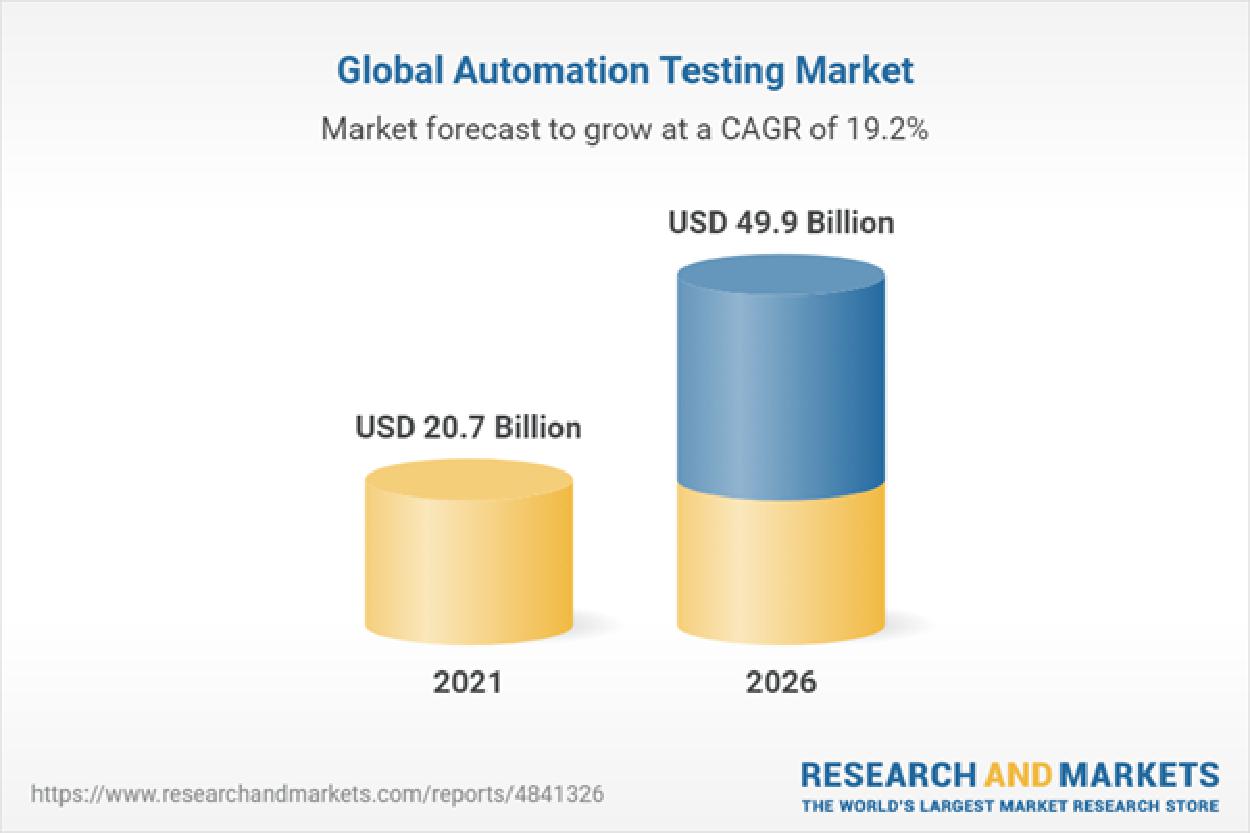
And this market is poised to take the world by storm. Currently estimated at $20.7 billion, revenue from test automation could reach $49.9 billion by 2026, growing at a compound annual growth rate of 19.2%, according to a study conducted by Research and Markets.
A Focus on Services
Automation services, in particular, are expected to account for the largest share of the market during this period. These services include consulting, planning, development, support, maintenance, documentation, training, implementation, management, return on investment analysis, virtualization, and evaluation. However, the dynamic functional testing segment (which requires running the software of a component or system) is expected to experience the highest growth rate.
Automation for the BFSI Sector
Finally, the study reveals that the banking, financial services, and insurance (BFSI) sector is expected to capture the largest market share. Digital transformation efforts are particularly focused on improving the customer experience, which can be further enhanced through test automation. The focus will be on rapid automation, automated decision-making, data security, and instant scalability.
Recent technological trends such as robotic process automation (RPA), artificial intelligence (AI), and machine learning will, in particular , help meet this growing demand for test automation.

Further Reading
FAQ
Why is the test automation market growing?
Because development cycles are accelerating and reliability has become critical. Test automation has become essential for fast and reliable delivery.
What is driving this growth?
The widespread adoption of CI/CD, pressure to maintain quality, the increasing complexity of applications, and the emergence of AI in testing.
Does no-code accelerate this adoption?
Yes. By making automation available to business teams, it expands the market beyond just technical teams.
What does this trend mean for businesses?
Test automation is becoming the norm, not a luxury. Organizations that delay are putting their quality and competitiveness at risk.
How does Mr Suricate position Mr Suricate in this market?
As a French provider of all-in-one no-code automated testing solutions, serving both business teams and large enterprises.