

The e-commerce sector is constantly evolving and continually reinventing itself to attract more and more customers. And 2022 will be no exception. What new practices should be implemented? Here’s an overview of e-commerce trends for 2022.
According to FEVAD’s annual report, the e-commerce sector generated 112 billion euros in 2020, with 1.5 million additional shoppers. We can say with certainty that online shopping is now an integral part of our consumer habits. But customer needs and behaviors are constantly changing, so it’s important for brands to adapt and find new, increasingly innovative ways to meet those needs. And while omnichannel retailing and mobile sales were all the rage in 2021, what will 2022 bring? Here are the 7 trends to watch closely this year.
The omnichannel sales
The numerous lockdowns and the public health measures that followed have driven the growth of omnichannel retailing. Consumers are no longer satisfied with using just one channel during their shopping journey. They might see a product on social media, visit the website on their phone, use price comparison sites on their computer, and make a purchase in-store. It is therefore essential to integrate these multiple channels to optimize the shopping experience, leading to greater customer satisfaction and, consequently, increased sales.
Online comparison sites, Google Shopping, product catalogs on Pinterest, Instagram and Facebook shops, Google Ads campaigns, mobile apps, chatbots, and marketplaces are the platforms where you can build your brand to diversify your customers’ shopping experience and improve your conversion rate.
Please note: These workflows are often quite complex to test manually, so it may be wise to consider an automation strategy. Mr Suricate , in particular,assist you with automating your omnichannel functional tests.

Augmented Reality
Among the factors that deter consumers from shopping online, the inability to see or try on a product is a common one. The solution? Turn to augmented reality. Since 2020, Shopify has offered the Shopify AR feature, which allows e-commerce businesses to create augmented reality shopping experiences to showcase their products. And the results speak for themselves: according to the e-commerce platform, interactions with products featuring AR (Augmented Reality) content have shown a 94% higher conversion rate than products without AR. So there’s a good chance that more and more brands will adopt this technology in 2022.
Note: If you decide to implement augmented reality, be sure to conduct graphical comparison tests to ensure that the visual rendering of the various pages is accurate at different stages of your website.

The Circular Economy
In 2020, 45% of consumers reported having already purchased a product from the circular economy online*, according to a study by Fevad and Médiamétrie. This figure has certainly risen over the past two years as environmental awareness has taken hold around the world. The circular economy involves designing products that can be reused, either by repairing them or by reusing their parts. More and more brands are launching initiatives of this kind. Ikea, in particular, has committed to producing 100% circular products (made from raw materials, recycled, remanufactured, refurbished, or reused items) by 2030, as well as to using only renewable and recycled materials.
*Fevad and Médiamétrie, 2020

The Subscription
A new form of customer loyalty is becoming increasingly common in the world of e-commerce, particularly in the food, clothing, and flower delivery sectors: the subscription program. It allows consumers to choose to receive one or more items they frequently purchase on a regular basis. Rather than having to visit the website every time they need these products, the brand automatically sends them at a chosen frequency (weekly, biweekly, monthly, or quarterly). This saves customers a considerable amount of time—something they greatly appreciate—not to mention that it ensures they never run out of these products.
Note: A feature such as a subscription must be tested regularly to ensure that it behaves in accordance with the requirements. Even if its criticality level is not high, it is advisable to implement test scenarios that include it in order to provide a user experience that is as comprehensive and seamless as possible.

Virtual Agents
Customer satisfaction and customer relationships will be at the heart of e-commerce strategies in 2022. And one of the key areas that must not be overlooked is real-time conversations with consumers. More and more retailers have recognized this and have implemented virtual agents. Powered by artificial intelligence, these agents are designed to initiate interactions at the right moment. They can provide information or offer personalized advice based on the user’s responses. According to a 2021 study by Botmind, retailers who integrate a virtual agent into their website see an average increase of 27% in customer satisfaction.
*Botmind, 2021*
Note: Virtual agents fit perfectly into a test automation strategy. After all, what better way is there to test automated responses than with automated functional tests?

The click-and-collect
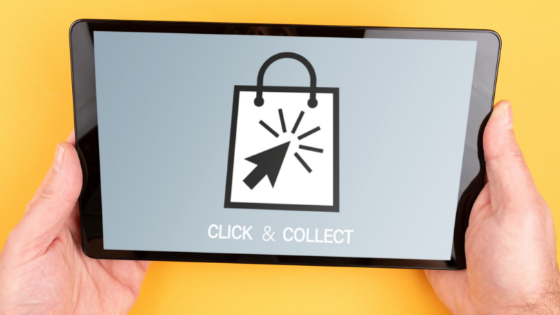
Since the first lockdown in March 2020, retailers and e-commerce businesses with physical stores have had to reinvent themselves to survive. Click-and-collect has gained momentum and is now part of consumers’ habits. This shopping method offers many advantages for customers: they can pick up their packages whenever they want, and there are no delivery fees. In 2022, click-and-collect will continue to grow and remain one of the most popular shopping options among consumers. If you don’t offer it yet, it’s now or never!
Ecology
With the growing number of e-commerce sites available to them, consumers have more choices and, in particular, tend to gravitate toward brands that incorporate sustainability into their strategy. Given that 78% of French consumers say they are influenced by a brand’s ethical responsibility* and that 77% would be willing to stop buying a brand’s products if its production methods are harmful to the environment*, e-commerce companies have every reason to adopt an eco-responsible approach, whether directly in terms of the product itself or in terms of shipping methods (packaging, carriers used).
*2021 Sustainable Brands study conducted by Imediacenter in partnership with LSA and its research firm Infoprodigital
*2021 survey by the Leboncoin website


Further Reading
To see the solution in action, check out our end-to-end testing.
Take It Further: Automated Testing in Retail and E-Commerce.