

In brief: SEO requires the right tools to analyze, optimize, and monitor search rankings. Our selection includes essential tools such as Semrush (all-in-one suite), Ahrefs (backlinks and content analysis), Surfer (AI-powered content optimization), and others. This comparison details each tool's functionalities, strengths, and limitations, helping you choose the one that aligns with your strategy and budget.
SEO (Search Engine Optimization) is an essential lever for improving a website's visibility on search engines like Google. However, it demands a rigorous approach supported by the right SEO tools.
SEO professionals simply cannot perform their work without these tools, which enable them to monitor performance indicators, diagnose issues, suggest improvements, analyze results, and automate processes wherever possible.
Without the appropriate tools, it becomes challenging, if not impossible, to identify opportunities and optimize one's ranking.
SEO tools are therefore essential for automating analysis, detecting opportunities, and refining strategy to outperform the competition.
In this article, we have selected the 5 best SEO tools, detailing their functionalities, advantages, and disadvantages to help you make the most suitable choice for your needs.
What is an SEO tool?
An SEO tool is software designed to optimize a search engine optimization campaign by leveraging available key data to achieve maximum impact.
These tools fulfill various functions, such as analyzing search queries, automating reports, providing AI-based content optimization recommendations, and analyzing website performance.
SEO tools generally fall into one of the following categories:
SEO Audit Tools: analyze one or more indicators related to search engine optimization efforts.
Keyword Research Tools: provide data on keyword trends and competitiveness to identify strategic opportunities.
Rank Tracking Tools: monitor the ranking of web pages or domains for specific keywords.
All-in-One Tools: offer a comprehensive suite of functionalities, including tools from other categories, with advanced options such as automation and artificial intelligence, enabling process optimization and rendering certain specialized tools obsolete.
Since SEO tools fall into distinct categories, it is impossible to name “the best” one in absolute terms.
In fact, the very title of this article is optimized for SEO.
In reality, the following SEO tools have been ranked using both democratic and authoritative criteria: based on their popularity, but also according to our practical experience and the positive impact observed with our own tool.
1. Semrush – the all-in-one SEO suite
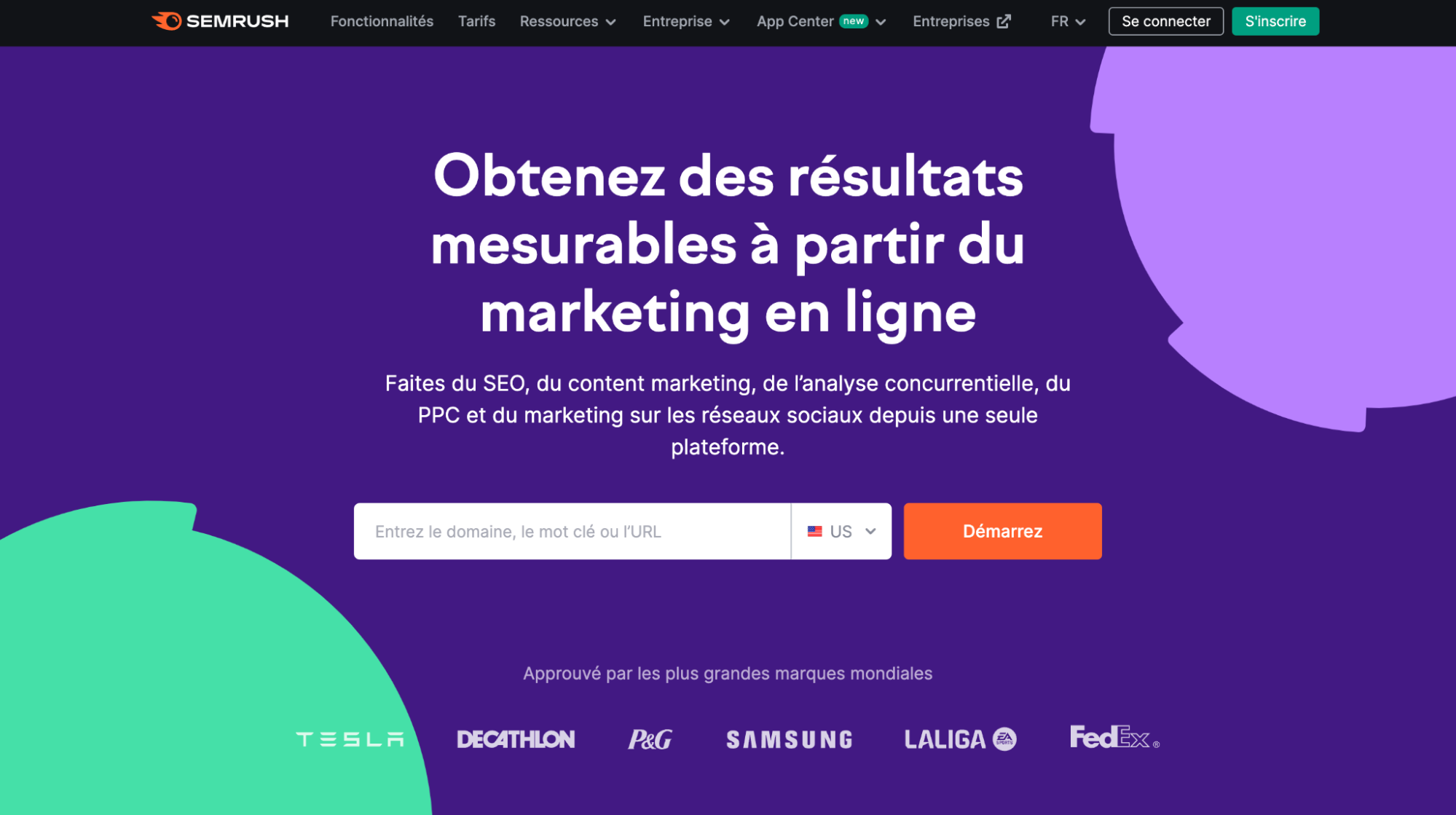
Semrush is one of the most popular and comprehensive SEO tools on the market, covering keyword analysis, SERP research, and page performance tracking.
Its rank tracking tool offers in-depth analytics and scalable functionalities, capable of meeting performance monitoring requirements.
Its detailed and customizable dashboard provides an overview of a tracked domain's performance, displaying key metrics such as site authority, backlinks, traffic, organic keywords, and average time on site.
It is also possible to delve deeper into these analyses via dedicated widgets, or to transform them into detailed reports for enhanced visualization and decision-making.
Key Benefits
✅ Advanced keyword research and tracking.
✅ In-depth competitive analysis.
✅ Real-time rank tracking.
✅ Comprehensive technical SEO audit.
✅ Backlink optimization.
✅ Customizable interface.
Disadvantages
❌ High pricing for small businesses.
❌ A feature-rich interface that can be complex for beginners.
2. Ahrefs – the benchmark tool for backlinks and content analysis
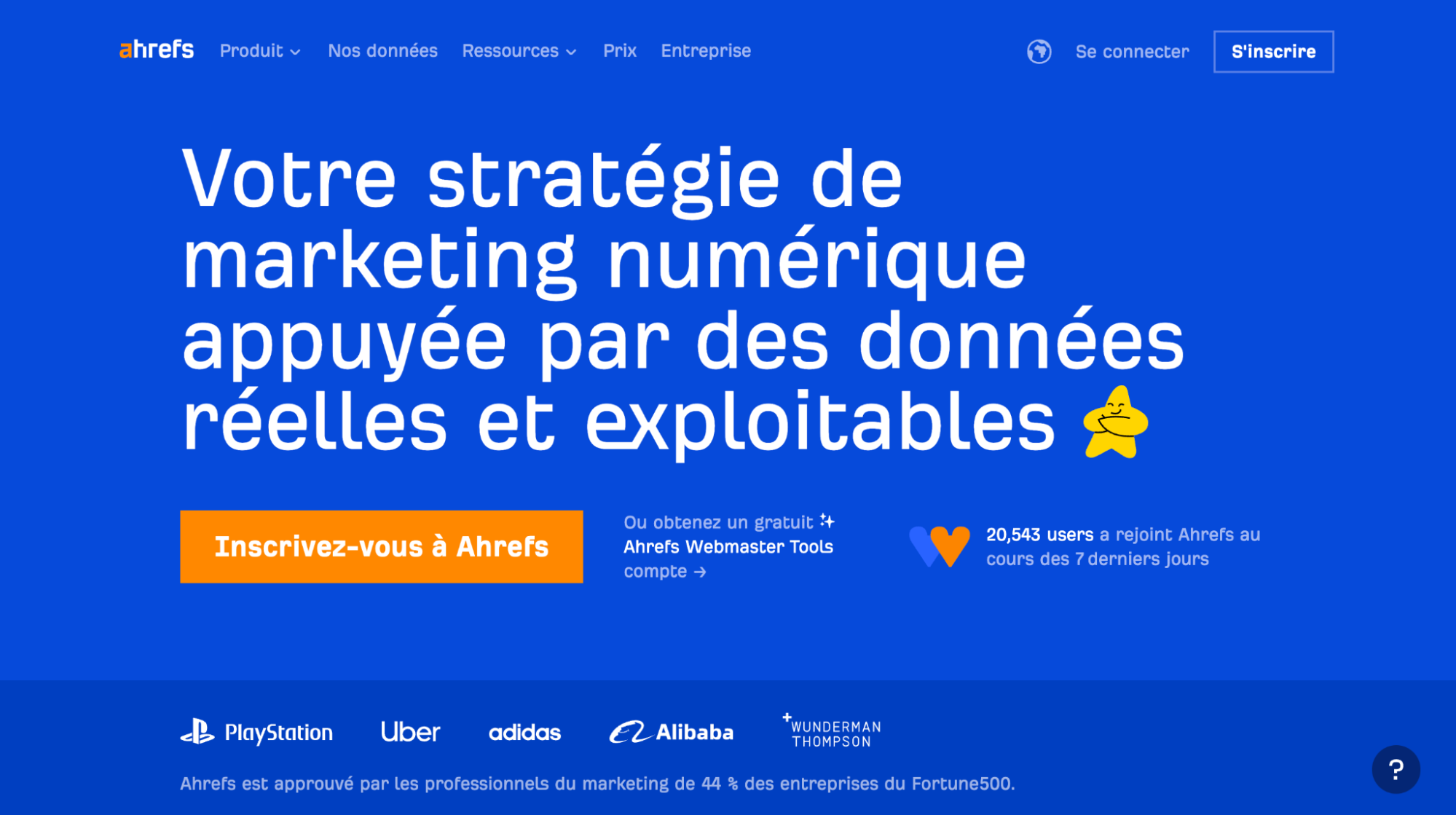
Ahrefs is particularly valued for competitive analysis and backlink monitoring.
Like Semrush, Ahrefs allows for tracking the evolution of web page and domain rankings for specific keywords, conducting SEO audits, and exploring historical ranking data via customizable charts.
With Ahrefs, you can analyze which pages generate the most backlinks, traffic, and SEO value in your industry, allowing you to adjust your content strategy accordingly.
Key Advantages of Ahrefs
✅ Ultra-comprehensive backlink database.
✅ In-depth analysis of competitor sites to identify their SEO strategies.
✅ Precise performance tracking and relevant content suggestions.
✅ Reliable page ranking data.
Disadvantages
❌ Less comprehensive than Semrush for on-site optimization.
❌ Limited options for generating customized reports.
3. Surfer – the AI SEO tool for content optimization and SERP analysis
Surfer is an SEO tool specializing in content optimization, combining artificial intelligence and SERP analysis to enhance the organic ranking of web pages.
Unlike Ahrefs and Semrush, which are more comprehensive SEO suites, Surfer focuses on content optimization based on the top-ranking pages on Google.
It offers a suite of 5 dedicated tools:
- Keyword Research: advanced keyword research, grouped by search intent.
- Content Editor: AI-powered content editor for structuring and optimizing articles.
- Audit: Detailed analysis of existing content to identify areas for SEO improvement.
- Domain Planner: Strategic content planning at a domain level.
- SERP Analyzer: In-depth study of search results to align content with top-ranking pages.
While these types of tools already exist on other SEO platforms, Surfer makes them more actionable through its advanced AI integration.
Key Advantages of Surfer
✅ Advanced SERP analysis to align content with top-ranking pages.
✅ AI-powered content optimization tool with real-time recommendations.
✅ Easy to use.
✅ Integration with Google Docs and WordPress.
Disadvantages
❌ Does not cover technical SEO or netlinking.
❌ Significant cost, especially for regular use.
❌ Limited credit system (credits are not cumulative).
❌ Per-article billing for AI.
4. Screaming Frog SEO Spider – The Essential Technical SEO Analysis Tool
Screaming Frog SEO Spider is a technical SEO audit tool that deeply analyzes page architecture and structure to identify issues that may affect search engine ranking such as broken links, misconfigured redirects, missing meta tags, duplicate content, and mobile optimization problems.
Its filtering and configuration system makes it an indispensable solution for SEO experts looking to improve a site's technical health.
While not the most intuitive of SEO tools, Screaming Frog offers impressive analytical depth for identifying and correcting technical errors.
One of Screaming Frog's major strengths is its level of customization: it allows for large-scale extraction of specific data for detailed audits.
Key Advantages of Screaming Frog
✅ Advanced crawl and detailed technical analysis.
✅ Wide range of configuration and filtering options.
✅ Integration with Google Analytics and Google Search Console.
✅ Free version available.
Disadvantages
❌ Unintuitive interface.
❌ Lacks competitive analysis and content optimization (focused solely on technical SEO).
❌ Occasional bugs during crawls.
5. Mr Suricate Automating SEO Testing for Error-Free Search Engine Optimization
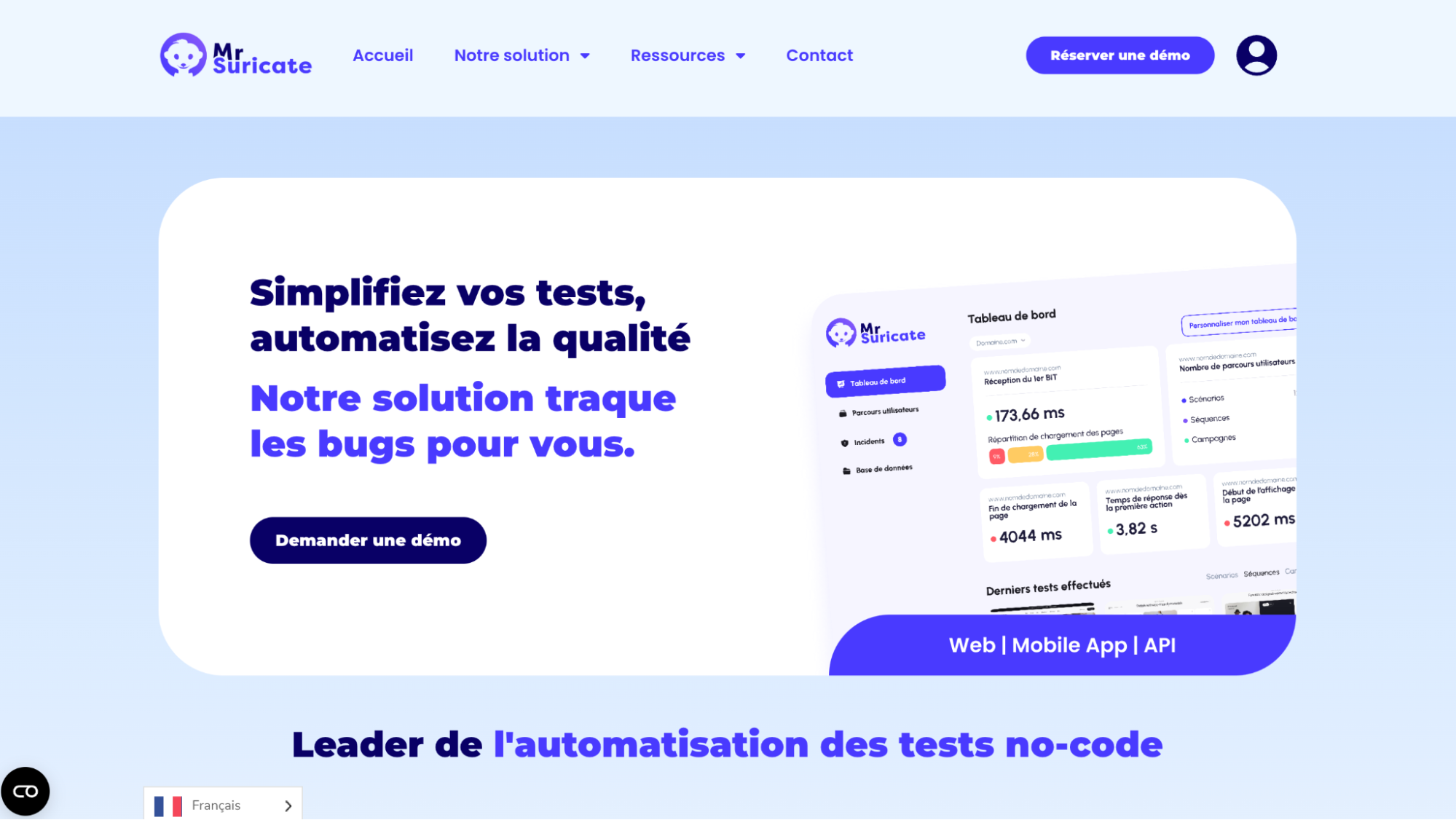
Best known for his expertise in automated testing, Mr Suricate has also proven to be highly effective in technical SEO.
Thanks to its continuous monitoring and automated SEO audit technology, the tool rapidly detects SEO errors before they impact a site's ranking on Google.
By simulating user journeys and identifying anomalies in real time, Mr Suricate that your site remains fully optimized for indexing and provides a seamless user experience.
Among the elements automatically monitored:
- The presence of title and meta-description tags.
- Page loading speed.
- URL structure.
- Web accessibility.
- Content optimization for target keywords.
With its automated SEO tests, Mr Suricate proactive management of your technical SEO, with instant alerts in case of any issues.
Key Benefits of Mr Suricate
✅ Automatic detection of SEO errors: broken links, incorrect redirects, missing meta tags.
✅ Test automation to ensure every page remains accessible and optimized.
✅ Navigation simulation to assess the impact of loading time and mobile ergonomics.
✅ Continuous monitoring to identify anomalies that may affect user experience and search engine ranking.
✅ Intuitive interface and detailed reports, facilitating problem analysis and correction.
✅ Tailored support.
✅ Ease of use, even for non-technical profiles.
✅ Simple integration with numerous third-party tools.
Disadvantages
❌ Less focused on keyword analysis and backlinks.
Mr Suricate The One-Stop Shop for Testing
Automated tests can be a powerful tool for optimizing your SEO and enhancing your website's visibility.
With the Mr Suricate automated testing tool, you can set up continuous SEO monitoring to maintain a competitive edge in an ever-changing environment.
FAQ
What is an SEO tool?
This software helps improve a website's visibility on search engines through keyword research, backlink analysis, technical audits, position tracking, and content optimization. It makes SEO measurable.
What is the best SEO tool?
It depends on the specific requirement: Semrush for a comprehensive suite, Ahrefs for backlinks and competitive analysis, Surfer for AI-assisted content optimization. Many professionals combine several of these tools.
Is an SEO tool sufficient for effective referencing?
No: the tool informs decisions, but SEO also relies on content quality, site technicality, and user experience. The tool accelerates analysis; it does not replace strategy.
Further Reading
To see the solution in action, check out our SEO tests.
Learn more: our comparison of automated testing tools.