

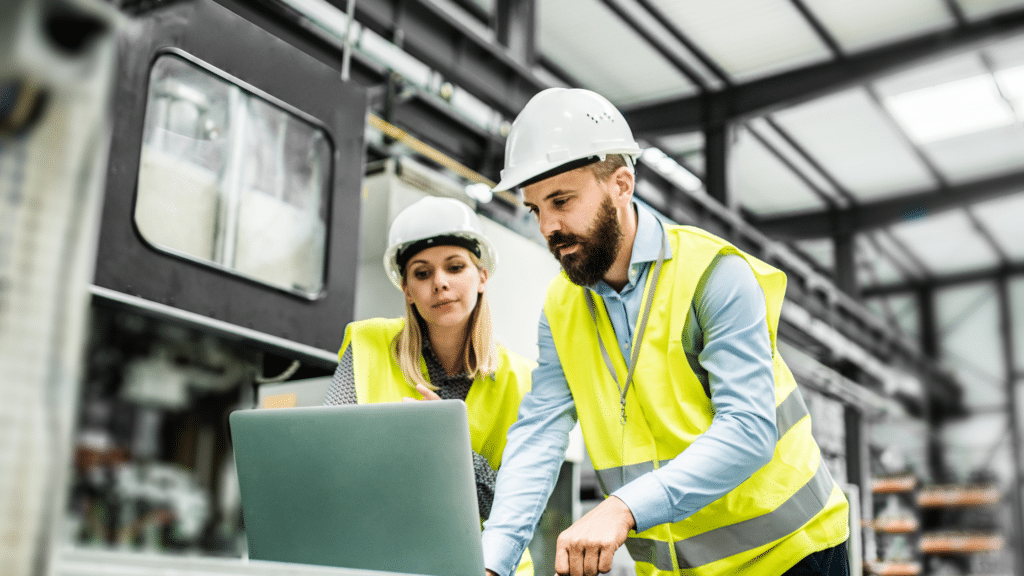
At a Glance: The manufacturing sector has traditionally been viewed as relatively behind other sectors that appear to rely more heavily on cutting-edge technology at every stage of their processes—such as the healthcare sector, for example. This guide covers: Digital trends in the manufacturing sector, Robotics, Computer vision: the expanding use of cameras, Process transformation.
The industrial sector has traditionally been considered relatively behind other sectors that appear more dependent on cutting-edge technology at every stage of their process, such as the healthcare sector, for example. However, in recent years, there has been a growing awareness of the importance of digitalization and the adoption of digital technologies in industry.
This sector is undergoing significant changes, and industrial companies are prioritizing the adoption of new technologies to remain competitive in the global market. This digital transformation is also known as “Industry 4.0” or the factory of the future and applies to construction, production, and manufacturing industries of all types (automotive, steel, etc.).
In this article, we explore the key trends and challenges faced by industrial companies regarding digital transformation.
Why is Digital Transformation Important in Industry?
Taking the construction and building sector as a sole example, according to McKinsey, global productivity growth in this sector has averaged 1% over the past two decades, and the demand for change in the industrial sector has never been stronger.
From a general perspective, industry has often faced specific challenges during digital transformation. Some of these challenges include the complexity of existing systems, the presence of obsolete equipment, cybersecurity, workforce training, and change management.
The slow pace of digital transformation in the industrial sector is also attributable to the lack of human and financial resources dedicated to this transition. Information technology (IT) was often viewed as a support service rather than a strategic component of the business.
However, many industrial companies have recognized the importance of digitalization to remain competitive in a rapidly evolving environment where the concept of service around the product becomes as crucial as the product itself.
They have begun investing in digital transformation initiatives and adopting new technologies to modernize their operations, placing it at the core of their overall strategy.
Some industrial companies have successfully gained a head start in digital transformation by developing smart factories and digital supply chains. These companies have benefited from increased automation, real-time data collection and analysis, and decision-making based on predictive analytics.
For players in the industrial sector, digital transformation means utilizing digital technologies for more efficient operations and developing additional services.
Digital technologies in industry can encompass everything from physical devices to software utilized in the office or in the field.
Digital Trends in the Industrial Sector
Technology has reinvented every sector, and industry is no exception.
The objective of Industry 4.0 is to create smart, interconnected factories and products, where machines, systems, and products communicate and cooperate autonomously. This enhances the efficiency, flexibility, and productivity of industrial processes, while also facilitating customization and on-demand production.
The following trends are increasingly adopted to improve processes, reduce errors, and increase return on investment.
Robotics
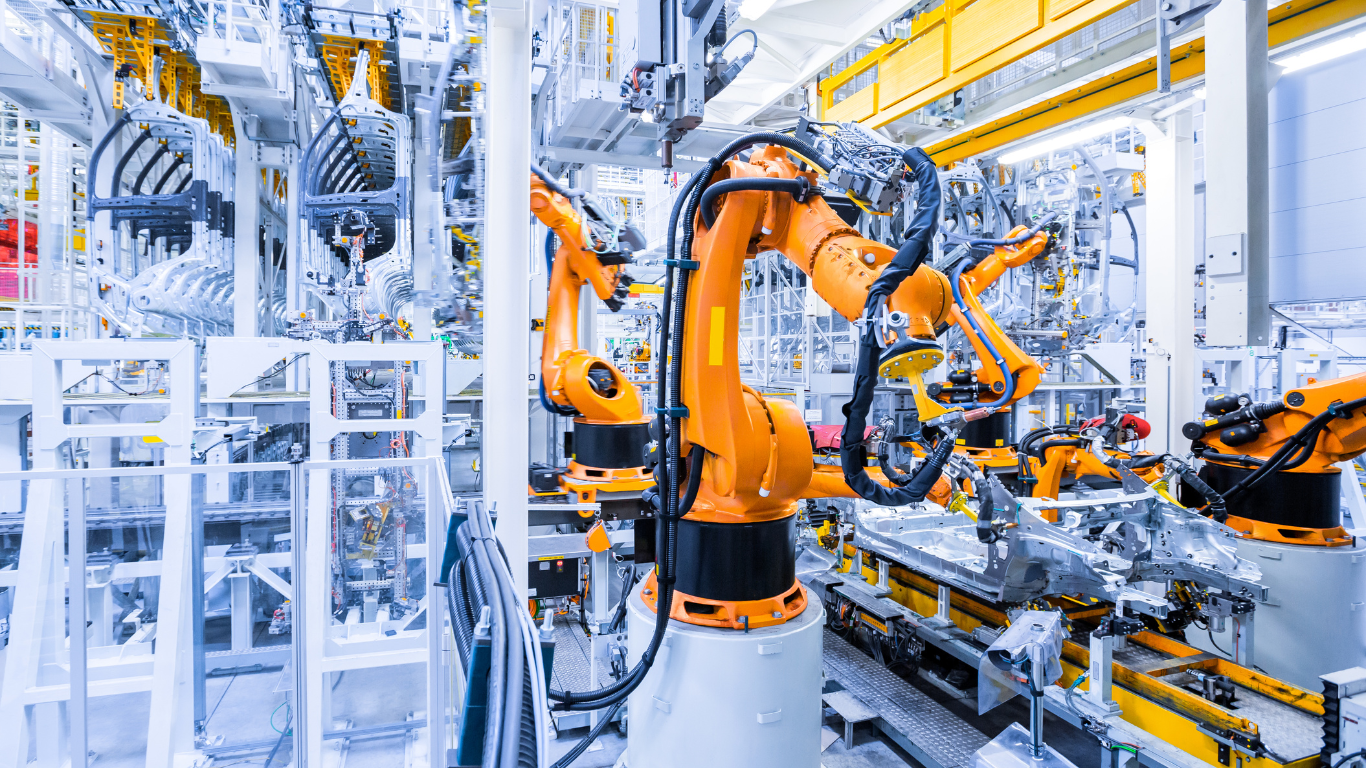
This represents the primary investment in Industry 4.0 factories. Industrial robots are becoming increasingly autonomous and flexible. Thanks to advanced sensors, artificial intelligence algorithms, and enhanced connectivity, robots can adapt to diverse tasks and changing environments without requiring complex programming.
There are several sub-categories: collaborative robots (cobots) are designed to work alongside human operators in factories. They are equipped with safety sensors and can detect human presence, enabling secure collaboration. Cobots are often easier to program and operate than traditional industrial robots, making them suitable for small and medium-sized enterprises.
Mobile robots are also utilized in factories to autonomously transport materials, parts, and products from one area to another. These robots can be equipped with safety sensors and navigation systems to move securely within a dynamic industrial environment.
Computer Vision: The Expanded Use of Cameras
Computer vision has become a key technology in industrial robotics. Robots are equipped with cameras and vision systems that enable them to detect and recognize objects, read barcodes, and perform quality control operations.
Advancements in solar technology, image quality, 360-degree cameras, and remote operation make cameras even more accessible and indispensable in the construction sector today for a variety of use cases. For instance, the HighView camera is the first active vision system installed on the boom head of a telehandler, designed to enhance precision in loading and handling applications.
Augmented Reality and Virtual Reality for Digital Twins
In the post-COVID and remote work environment, augmented reality and virtual reality enable remote site visits or the virtual replication of a location, such as a factory.
The company Prospect offers various VR solutions to help businesses immerse stakeholders and team members in a virtual environment. By doing so, teams can leverage more consistent decision-making for field activities.
In a factory context, by monitoring real-time data from actual factory sensors, the digital twin can predict potential failures and issues. This enables operators to perform preventive maintenance, scheduling interventions before problems actually arise, thereby reducing unplanned downtime and maintenance costs.
These technologies also facilitate the training, maintenance, repair, and even design (by simulating work environments before their actual implementation) of machinery and equipment.
The Internet of Things (IoT): Smart and Connected Equipment
Machines and equipment in the industrial sector are becoming increasingly sophisticated while simultaneously being simpler to use, more secure, and higher performing.
For example, the Manitou JSM Autopower automatically adjusts engine speed based on the hydraulic power demand from the operator's hand on the JSM (Joystick Switch & Move).
Furthermore, Nuron, the cordless platform with integrated connectivity, has created a system where all tools generate data that is then stored on the batteries and securely sent to the cloud with each charge, requiring no operator intervention.
The collected data pertains to tool usage, charging point location, and battery status, which reduces downtime and optimizes tool utilization.
Data Analytics and AI
In an Industry 4.0 factory, sensors and connected devices collect vast amounts of real-time data on machines, operations, and products. This data is then analyzed by AI systems to detect patterns, anomalies, and optimization opportunities. Based on these analyses, decisions can be made automatically to optimize performance, prevent failures, reduce downtime, and improve product quality.
Process Transformation
Industry 4.0 has the potential to transform traditional production models by introducing more agile and automated processes. This can also impact skills and employment, requiring workers to develop new competencies related to technology and data management.
E-commerce and Essential IT Management Solutions for a Connected Enterprise
E-commerce and the management of IT solutions constitute other elements of digital transformation, facilitating relationships with customers and suppliers.
Here is a non-exhaustive list of solutions used in this sector:
ERP is an integrated solution for managing business operations. It covers several areas such as production planning, inventory management, purchasing management, sales management, accounting, and human resources. It enables process optimization and centralization of key company information.
WMS (Warehouse Management System) is an IT solution that helps efficiently manage and track goods movements, storage locations, stock levels, shipments, and receipts within the warehouse.
TMS (Transportation Management System) is a management system that enables efficient management of the goods delivery process by optimizing routes, tracking shipments, and facilitating communication among stakeholders.
CMMS (Computerized Maintenance Management System) is a management tool used to plan, track, and analyze preventive and corrective maintenance operations.
SRM (Supplier Relationship Management) is utilized to enhance relationships with upstream suppliers in the supply chain.
PLM (Product Lifecycle Management) is an IT system used to manage the entire lifecycle of a product, from its initial design and development through production, commercialization, and subsequent maintenance.
PIM (Product Information Management) is designed to facilitate the creation, management, and consistent distribution of product information across various sales channels, such as e-commerce websites, printed catalogs, and mobile applications.
CRM (Customer Relationship Management) is a solution aimed at centralizing, organizing, and analyzing customer-related information to better understand their needs, personalize interactions, and foster lasting relationships.
E-commerce solutions are software platforms that enable businesses to create, manage, and operate online sales websites. They offer a range of functionalities to facilitate online store creation, product management, payment processing, order management, and customer management.
Major players across all sectors today seek an intuitive, bug-free, self-service experience with minimal clicks for all these types of solutions.
Challenges of Digital Transformation in the Industrial Sector
Common challenges of digital transformation in the industrial sector include incomplete or unsuccessful past digital transformation projects, securing stakeholder buy-in, and integrating technology with business processes.
These primary challenges are exacerbated by the sector's unique characteristics:
Fragmentation
Implementing change across numerous projects and disciplines presents a significant challenge.
Each project is distinct and requires the services of various specialists such as architects, engineers, and project managers, as well as subcontractors.
Large, multi-year projects valued at several hundred million euros offer the opportunity to implement new technologies, establish efficiency gains, and reinforce change over time.
Workforce Turnover
It is uncommon for the same group of individuals to work on identical projects.
This complicates the successful implementation of processes and technologies across multiple projects.
Data Management
Companies in the industrial sector have historically conducted their operations using paper-based methods, and these same companies find it challenging to transition from physical documents to digital formats.
Given that data serves as the backbone of any digital enterprise, inadequate data management constitutes a significant impediment.
Resistance to Change
A significant portion of the industrial sector operates as it has for decades. It heavily relies on manual and mechanized tools and processes. The challenge persists in the fact that a substantial demographic within the sector distrusts new digital technologies and impedes their adoption.
Employees in the sector must be trained in new technologies and supported throughout the transition process.
Data Security
With increased machine connectivity, data security emerges as a primary concern.
Enterprises must implement robust security measures to safeguard sensitive data against cyberattacks and privacy breaches.
Integration of Existing Systems
Many companies in the industrial sector already have systems in place, such as inventory management software or shipment tracking systems.
One of the challenges involves integrating these existing systems with new digital technologies without disrupting daily operations.
This may necessitate adjustments and customizations to ensure seamless compatibility and connectivity.
Return on Investment (ROI)
Digital transformation can require substantial investments. It is crucial to measure the return on investment to justify these expenditures and ensure that new technologies deliver added value to the business.
Ensuring an Optimal, Bug-Free User Experience
Whether it concerns software within a handling machine or an e-commerce experience, for instance, bug-free digital customer journeys are essential for any enterprise aiming to meet modern demands and satisfy clients who rely on them for cutting-edge technology.
Mr Suricate QA Testing for Industry Professionals
To succeed in the digital era as an industrial enterprise, it is essential to ensure that user journeys meet user requirements.
The no-code SaaS solution Mr Suricate a wide range of automated tests to help you manage your acceptance testing and provide your users with the best possible experience.
Take control of your applications and detect bugs in real-time across your websites, applications, and APIs by regularly reproducing your user journeys.
Further Reading
- Trends and Challenges in Digital Transformation in the Healthcare Sector: Part 2
- Trends and Challenges in Digital Transformation in the Hospitality and Restaurant Industry
- Trends and challenges of digital transformation in the tourism and leisure sector
- Automated Testing for Transportation and Logistics
- Automated Testing for Retail and E-commerce
- Automated Testing for the Hospitality and Restaurant Industry
- Mr Suricate Suricate's Features
FAQ
Why is Digital Transformation Important in Industry?
It improves productivity, quality, and competitiveness by connecting equipment, data, and processes. It has become a key factor in staying competitive in the face of competition.
What are the major digital trends in the industry?
Robotics, computer vision, augmented and virtual reality with digital twins, the Internet of Things, process transformation, and industrial e-commerce.
What are the main challenges of this transformation?
System fragmentation, workforce turnover, data management and security, resistance to change, integration of existing systems, and return on investment.
How can we ensure the reliability of connected systems?
By continuously testing and monitoring critical applications and user flows. The more interconnected systems are, the faster a failure spreads: monitoring becomes essential.
Are these issues limited to large industrial companies?
No. This transformation applies to businesses of all sizes. A no-code testing and monitoring solution like Mr Suricate for both business teams and large industrial companies.
Take It Further: Automated Testing in Industry.