










Non-Regression Tests (NRT): Securing Your Releases Through Automation

Every software evolution can introduce anomalies into functionalities that previously operated flawlessly. Non-regression tests (NRT) verify that a code modification, an update, or a new feature has not disrupted existing functionality.
However, as applications grow in complexity and releases become more frequent, executing these tests manually becomes challenging. Test automation then enables securing production deployments while reducing the workload for teams.

What is a non-regression test?

A non-regression test involves verifying that a modification made to an application has not introduced bugs into existing functionalities.

When a new version is developed, teams must ensure that:

  • legacy functionalities remain operational

  • critical user journeys remain operational

  • no regression impacts the user experience


Non-regression tests are therefore essential to guarantee the long-term stability of an application.

Why are non-regression tests indispensable?

Applications are constantly evolving:

Each modification can cause side effects.

Without a robust non-regression testing strategy:

Regression testing safeguards these developments.

The Limitations of Manual Regression Testing

Each modification can introduce side effects. Over time, this approach quickly reveals its limitations.

The number of scenarios requiring validation increases with each application evolution. Consequently, test campaigns become protracted and demand substantial resources.

Due to time constraints, teams are sometimes compelled to reduce the testing scope. As a result, certain critical user journeys may remain unverified.

Repetitive testing consumes substantial man-hours. Consequently, maintaining QA at scale becomes challenging.

Why Automate Regression Testing

Test automation provides a solution to these challenges. Test scenarios can be automatically executed with every product evolution.

This notably enables:

  • more frequent testing

  • earlier anomaly detection

  • reduced manual testing effort

  • improved coverage of critical user journeys

Teams save time while simultaneously enhancing the quality of their applications.

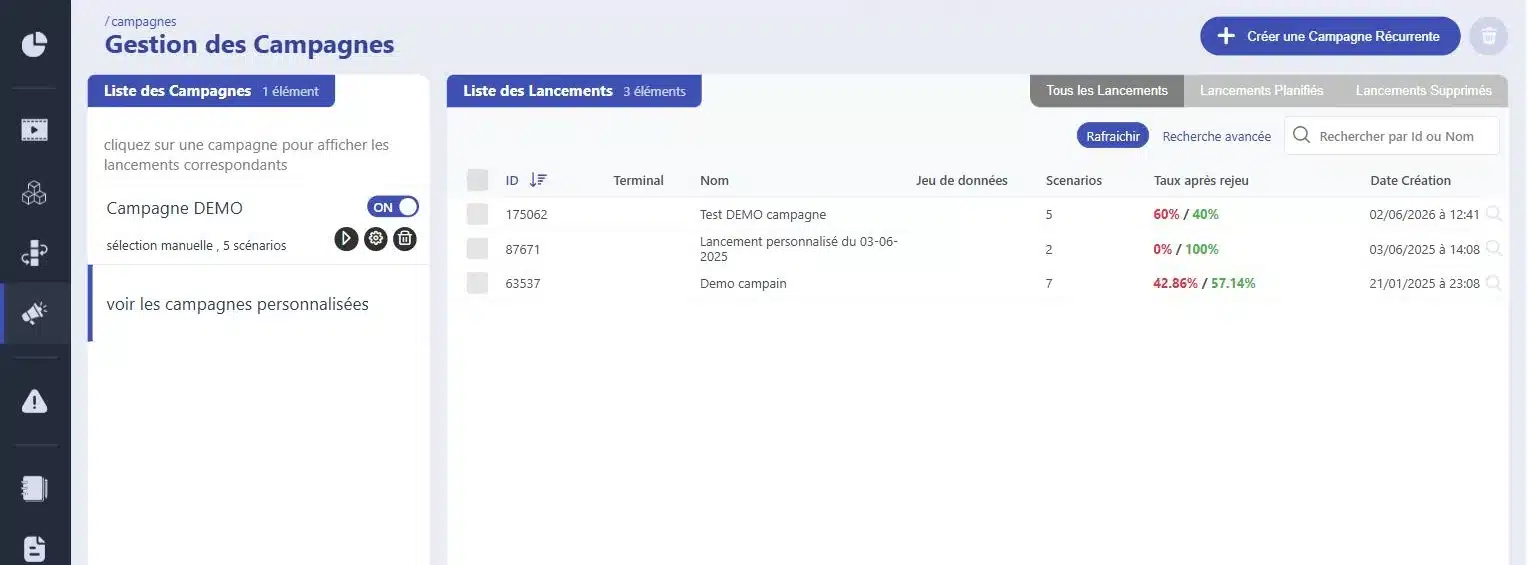
Mr Suricate Dashboard

Are you weary of repetitive and time-consuming manual testing?

Embrace No Code automation, and your perception of Regression Testing (TNR) will be revolutionized!

The Benefits of Automated Regression Testing

Implementing a Regression Testing (TNR) automation strategy yields several tangible benefits.

Purple Thumb Icon

More Reliable Releases

Anomalies are detected prior to production deployment, enabling teams to deploy with increased confidence.

Purple Hand Icon

Eliminate Production Bugs

Regressions are identified earlier in the development cycle, thereby minimizing user-reported incidents.

Rocket icon

Time Savings for Teams

Automated scenarios eliminate repetitive testing, allowing QA teams to concentrate on high-value tests.

Star icon

Enhanced Software Quality

Critical user journeys undergo continuous testing, making quality measurable and manageable.

How Mr Suricate simplifies NRT Automation

Mr Suricate empowers product and QA teams to implement automated non-regression tests with ease.

Mr Suricate Scenario Creation

Leveraging its no-code automated testing platform, teams can:

  • create scenarios that replicate user journeys

  • automate the testing of critical functionalities

  • execute tests with each release

  • rapidly detect anomalies

Tests can be executed continuously to monitor application quality.

The platform's integrated intelligence also simplifies scenario maintenance over time.

Software Quality Finally Mastered

With a non-regression test automation strategy, you can:

Shield icon

Secure their Production Deployments

Purple Thumbs-Up Icon

Reduce the Risk of Bugs

Purple Smiley Icon

Improve User Experience

Rocket icon

Accelerate Development Cycles

Beyond Non-Regression Tests

Mr Suricate assists you in automating various types of tests to comprehensively address your needs.